Your Cameras Are Your Witnesses: How CowCams Footage Protects Your Insurance Claim After a Wildfire
The 2026 wildfire season has already burned nearly 8 million acres across the Western United States — and it's not over. Oregon's Big Grass Fire alone consumed 578,637 acres, making it the largest wildfire in that state's recorded history. In Utah, the Cottonwood Fire destroyed nearly 94,000 acres and left ranchers finding dead cattle across scorched pastureland. In Colorado, the Aspen Acres Fire destroyed 850 structures and forced over 4,000 evacuations. Nebraska's Morrill Fire — 642,029 acres — became the largest documented wildfire in the state's history.
For ranchers in the path of these fires, the devastation is immediate and obvious: burned fences, destroyed outbuildings, dead livestock, scorched grazing land that won't recover for years. What's less obvious — until you're sitting across from an insurance adjuster — is how hard it is to prove what you lost without documentation.
That's where a barn camera system becomes something you never expected it to be: your most important financial protection tool.
🔥 2026 Western Wildfire Season — By the Numbers
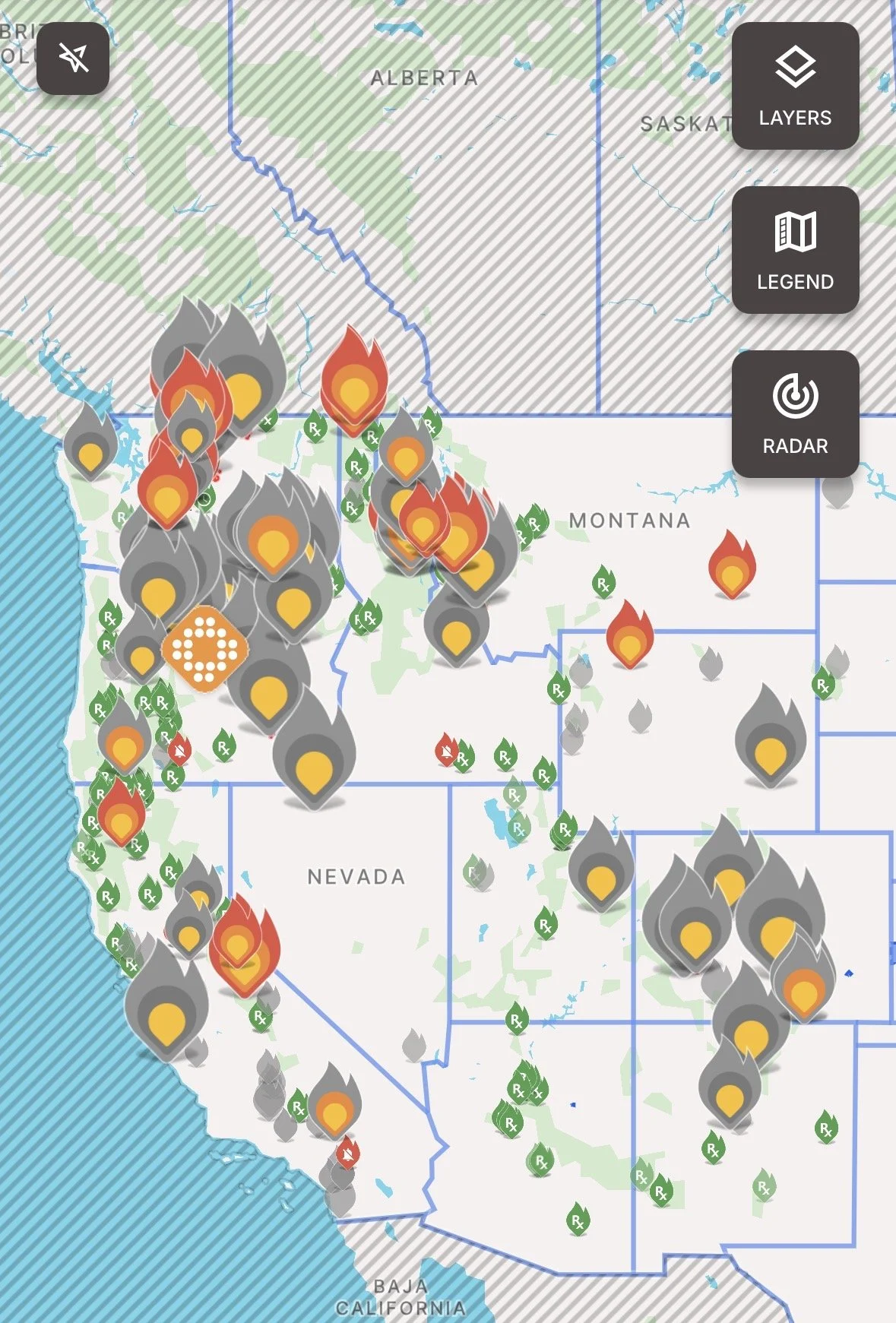
51,434 total fires across the US through October 2026 ~8 million acres burned nationally Oregon: Big Grass Fire — 578,637 acres (state record) Utah: Cottonwood Fire — 94,000 acres, 150+ structures destroyed Colorado: Aspen Acres Fire — 102,000 acres, 850 structures destroyed Nebraska: Morrill Fire — 642,029 acres (state record) Washington, Idaho, Kansas, Texas, Arizona: all recorded major fire events Sources: Wikipedia 2026 US Wildfires, ABC News, Farm Progress
The Insurance Problem Nobody Talks About Until It's Too Late
When a wildfire moves through a ranch at 60 miles per hour — which they can and do — you're not grabbing a camera and documenting your property. You're getting your family and your livestock out.
Weeks later, when the smoke clears and you sit down to file an insurance claim, you're working from memory. How many head were in that pasture? Which outbuilding had the new equipment in it? What was the fence line configuration before the fire jumped it? Was the water system already installed before the fire — or after?
Insurance adjusters are not adversarial, but they are thorough. They need documentation. They need proof of condition, proof of count, and proof of value — before the fire. When you can't provide it, claims get reduced, delayed, or disputed. And when you're already facing the loss of livestock and pasture you've spent years building, a reduced insurance payout can be the difference between rebuilding and selling out.
What Insurance Companies Ask For (That Most Ranchers Can't Easily Provide)
• Pre-loss inventory of livestock — head count by class and breed • Documentation of structures and their contents before the fire • Proof of equipment value and condition at time of loss • Evidence of fencing layout and condition • Records showing the fire caused the loss (vs. pre-existing condition) • Verification that claimed animals were actually on the property
How a Barn Camera System Changes Everything
A CowCams barn camera system running 24/7 does something no spreadsheet or hand-written inventory can do: it creates a continuous, timestamped, visual record of your operation — before, during, and after any event.
That footage is evidence. Not just useful documentation — actual admissible evidence of the state of your property, your livestock count, and your structures at any specific point in time. When a wildfire comes through, that footage becomes the foundation of your insurance claim.
Pre-Fire Documentation — The Foundation of Every Claim
Cameras covering your barn, corral, calving pens, equipment shed, and pasture entrances create an automatic pre-loss record without any extra effort on your part. When you file a claim, you can pull footage from a week before the fire and show:
• Exact head count — cattle, horses, sheep, or other livestock visible on camera
• Condition and location of structures — roofs intact, fencing complete, equipment present
• Specific equipment in specific locations — chutes, feeders, waterers, stored machinery
• Pasture and grazing land condition before fire damage
• Water system infrastructure — tanks, pipes, troughs
This is the kind of pre-loss documentation that insurance adjusters rely on to validate what you're claiming. Without it, you're asking them to take your word for it.
During the Fire — Time-Stamped Evidence of the Event Itself
Many CowCams systems capture smoke, flame, or fire approach on camera — not because you planned for it, but because the cameras are always running. This footage establishes:
• The exact time the fire reached your property — critical for insurance timeline questions
• The direction of fire travel and which structures were affected in what order
• Evidence that the fire, not a pre-existing condition, caused specific losses
• Footage of livestock in distress or displacement — documented loss, not assumed loss
For claims that involve questions about whether a structure was fire-damaged or whether livestock losses were fire-related, this timestamp evidence is often the deciding factor.
After the Fire — Documenting What's Left
Post-fire, cameras that survived (or were on the perimeter of the fire zone) continue documenting. If any structures partially burned, if livestock are missing but may have escaped, if equipment was damaged but not destroyed — ongoing footage gives you a running record of conditions as you make decisions about recovery.
This matters for claims involving livestock that may have fled — cameras showing animals leaving the property under fire stress is documentation of loss even if remains aren't recovered.
Real Scenarios Where Camera Footage Saves Claims
Scenario 1 — Missing Cattle
A wildfire moves through a 2,000-acre operation overnight. In the morning, 40 head are unaccounted for. The rancher believes they perished in the fire or fled through burned fencing, but no carcasses are visible.
Without cameras: The insurance company may dispute the livestock count or require extensive additional documentation before paying on missing animals.
With CowCams footage: Pre-fire footage establishes the herd count in the days before the fire. During-fire footage shows cattle in the pasture before smoke obscures the view. The rancher can demonstrate specific animals were on the property and that fire conditions caused their loss — a fundamentally stronger claim.
Scenario 2 — Structure and Equipment Disputes
An equipment shed burns. The rancher claims a skid steer, two ATVs, and a hydraulic squeeze chute were inside. The insurer asks for proof.
Without cameras: The rancher relies on purchase receipts (which may not reflect current value) and their own testimony.
With CowCams footage: A camera covering the equipment shed entrance shows vehicles entering and exiting in the weeks before the fire. The squeeze chute is visible in the barn overview shot taken 48 hours before the fire. The claim is documentable, not just arguable.
Scenario 3 — Fence Line and Infrastructure
A rancher claims 3 miles of perimeter fencing was destroyed. The insurer wants documentation of the fencing's condition and extent before the fire.
With a camera covering the corral and main gate, plus a wide-angle view of the main pasture approach, the pre-fire footage establishes fence line configuration, post condition, and the scope of the installation — giving the adjuster a baseline to work from.
The USDA Safety Net — And Why Documentation Still Matters
After major wildfire events, USDA programs provide a second layer of support beyond private insurance. The Livestock Indemnity Program (LIP) compensates ranchers for above-normal livestock losses due to adverse weather including wildfires. The Emergency Livestock Assistance Program (ELAP) covers feed costs when grazing land is lost to fire.
These programs also require documentation: inventory counts, proof of loss, and confirmation that losses were fire-related. Camera footage strengthens USDA program claims exactly the same way it strengthens private insurance claims.
USDA Programs for Wildfire-Affected Ranchers
Livestock Indemnity Program (LIP): Compensates for livestock deaths caused by wildfires above normal mortality rates Emergency Livestock Assistance Program (ELAP): Covers feed, water, and transportation costs when grazing is lost to fire Farm Service Agency (FSA): Emergency loans and direct payments for disaster-affected operations Apply through your local FSA office — usda.gov/topics/disaster-assistance All programs require proof of loss. Camera documentation strengthens every application.
CowCams Features That Matter Most for Fire Documentation
Local Recording — No Internet Required
During a wildfire, internet connectivity is often the first thing lost — cell towers go down, power goes out, satellite links fail. CowCams systems with onboard NVR (Network Video Recorder) storage record locally regardless of connectivity. When you return to the property, the footage is there — even if the internet wasn't.
This is one of the most important differences between a farm-grade barn camera system and a consumer home security camera. Consumer systems typically require cloud connectivity to save footage. If the connection drops during the event, the footage is lost. Local recording means the record survives even when the network doesn't.
Cloud Backup for Off-Site Storage
For operations with connectivity, CowCams systems can simultaneously record locally and back up to the cloud. Cloud-stored footage survives even if the physical cameras are destroyed in the fire — giving you access to pre-fire documentation even when the hardware is gone.
Best practice: ensure cloud backup is active and that at least 30 days of footage is retained in your plan. Most insurance investigations look back 7–30 days from the date of loss.
Wide-Angle and PTZ Coverage
A PTZ (pan-tilt-zoom) camera on a barn or equipment shed can cover multiple buildings and pasture areas in a single sweep. Wide-angle fixed cameras capture broader scenes. The right camera placement means one or two cameras are doing the documentation work that would otherwise require extensive manual record-keeping.
Cellular LTE Backup
CowCams systems with LTE cellular connectivity stay online even when your landline internet goes down. During a fire approach, you may lose your ISP connection hours before the fire arrives — but cellular-backed cameras continue streaming and recording right up to the point they lose power, maximizing the pre-fire documentation window.
Night Vision Coverage
Many wildfires move fastest at night, when humidity drops and wind picks up. Full-color night vision or infrared night vision means your cameras are capturing usable, documented footage even when the fire arrives at 2am.
How to Set Up Your Camera System for Maximum Insurance Value
If you already have a CowCams system — or you're setting one up — here are the placement priorities that maximize its value as documentation:
• Main barn entrance and interior overview: establishes what's inside and when
• Equipment shed and machinery storage: captures what equipment is present and in what condition
• Corral and livestock sorting area: documents head count during normal operations
• Pasture gate entry points: records animals moving in and out of pasture
• Water infrastructure (tanks, wells, pump houses): documents infrastructure before fire damage
• Perimeter overview where possible: captures fence line condition and extent
You don't need a camera on every fence post. Four to eight well-placed cameras covering your main structures and livestock handling areas create a comprehensive pre-loss record of the property.
Recommended Practice: Monthly "Insurance Walkthrough" Recording
Once a month, do a slow pan of each camera's field of view during peak activity — cattle in the corral, equipment in the shed, livestock in pasture. Save or bookmark these recordings as timestamped baseline documentation. In a loss event, these monthly snapshots give your adjuster clear, organized pre-loss evidence without having to search through weeks of continuous footage.
Talk to Your Insurance Agent Before the Next Fire Season
The time to have the documentation conversation with your insurance agent is not when you're filing a claim. It's now. Ask specifically:
• What documentation do you need to validate a livestock loss claim?
• Will pre-fire camera footage be accepted as evidence of property condition?
• What is your claims process for fire events where structures are destroyed but some footage may have survived?
• Does maintaining documented camera records affect my premiums?
Many agricultural insurers are increasingly familiar with farm camera systems as documentation tools — but the policies and procedures vary. Understanding your insurer's expectations now means you can make sure your CowCams setup captures exactly what they'll need.
The Bottom Line for Western Ranchers
The 2026 fire season has already left thousands of Western ranchers facing the hard math of rebuilding. Livestock replacement is at record-high prices. Grazing land takes years to recover. Replacement fencing and structures come out of cash flow while revenue is gone.
Insurance and USDA disaster programs exist to help close that gap — but they pay on documented losses, not estimated ones. Ranchers who can show what they had before the fire get paid faster, more fully, and with less dispute.
A CowCams barn camera system doesn't prevent wildfires. Nothing does. But it turns your operation's normal day-to-day footage into a timestamped legal record — one that stands up when you need it most.
In a year like 2026, that record is worth more than the camera system cost many times over.
Protect Your Operation Before Fire Season Ends
Don't wait until you're filing a claim to wish you had documentation. Contact CowCams to build the system that covers your operation — and protects your insurance position when it matters most.
cowcams.com | 1-833-222-COWS | info@cowcams.com
Sources: Wikipedia — 2026 United States Wildfires; ABC News — Biggest US Wildfire Leaves Ranchers with Dead and Missing Cattle; Farm Progress — Nebraska Wildfires; USDA FSA — Disaster Assistance for Agricultural Producers; USDA RMA — Emergency Procedures for Livestock Impacted by Wildfire (MGR-26-005); Western Ag Network — Livestock Indemnity Program Helping Ranchers with Wildfire Losses; Idaho Farm Bureau — How to Protect Livestock